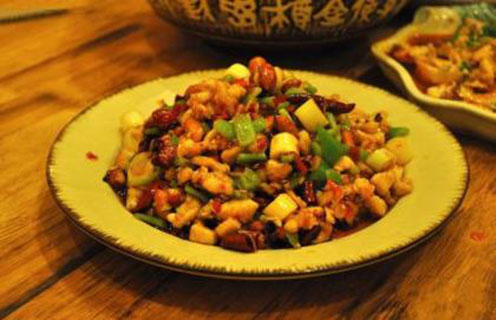
Kung Pao Chicken
Introduction
Kung Pao Chicken is a famous Chinese dish that hails from Sichuan cuisine, renowned for its bold flavors and diverse culinary techniques. It is a stir-fried dish made with diced chicken, peanuts, vegetables, and chili peppers. This dish is celebrated for its unique balance of sweet, sour, and spicy flavors, which are hallmark characteristics of Sichuan cooking.
History
The origins of Kung Pao Chicken can be traced back to the Qing Dynasty (1644-1911), where it was named after a government official, Ding Baozhen, who was known as "Gongbao" or "Kung Pao" due to his title as a palace guardian. The dish was initially created in Sichuan province and later spread to other regions of China. Over time, it underwent several adaptations, with variations emerging in different areas. Despite its evolution, the dish has retained its core ingredients and cooking style, symbolizing the rich culinary history of Sichuan cuisine. Chengdu, capital of Sichuan province, gained official recognition when the United Nations Educational, Scientific and Cultural Organization (UNESCO) as a "City of Gastronomy" in 2010.
Ingredients
Traditional Kung Pao Chicken features a few essential ingredients that create its signature taste. The primary component is chicken, often from a specific breed known as sanhuang chicken, which is prized for its tender meat. The chicken is diced and combined with peanuts, which add a crunchy texture. Red chili peppers are another key ingredient, providing the characteristic heat and a touch of smoky flavor. The dish also contains vegetables like bell peppers and scallions, adding color and nutritional value. The sauce is a mixture of soy sauce, vinegar, sugar, and Sichuan peppercorns, which together create a complex and flavorful glaze that coats the chicken and vegetables.
Preparation
Preparing Kung Pao Chicken requires precision and skill. The chicken is first marinated to enhance its flavor and tenderness. Next, the wok is heated to a high temperature, and the ingredients are quickly stir-fried. This rapid cooking process helps to seal in the flavors and achieve the desired texture. A critical technique used in the preparation is "ran zhi," where the contents of the wok are tossed into the air to ensure even cooking and to catch flames inside the wok for a smoky aroma. The entire cooking process is completed within 35 to 40 seconds once the chicken is added, ensuring the meat remains juicy and the peanuts and chilies retain their crunch.
Cultural Exchange
In a visit to China in 2014, then German chancellor Angela Merkel experienced the rich tapestry of Chinese culture and cuisine in Chengdu. One of the highlights of her trip was indulging in the iconic dish, Kung Pao Chicken, at a traditional Sichuan restaurant. Known for its bold flavors and fiery kick, Kung Pao Chicken was a culinary delight that left a lasting impression on Merkel.








